

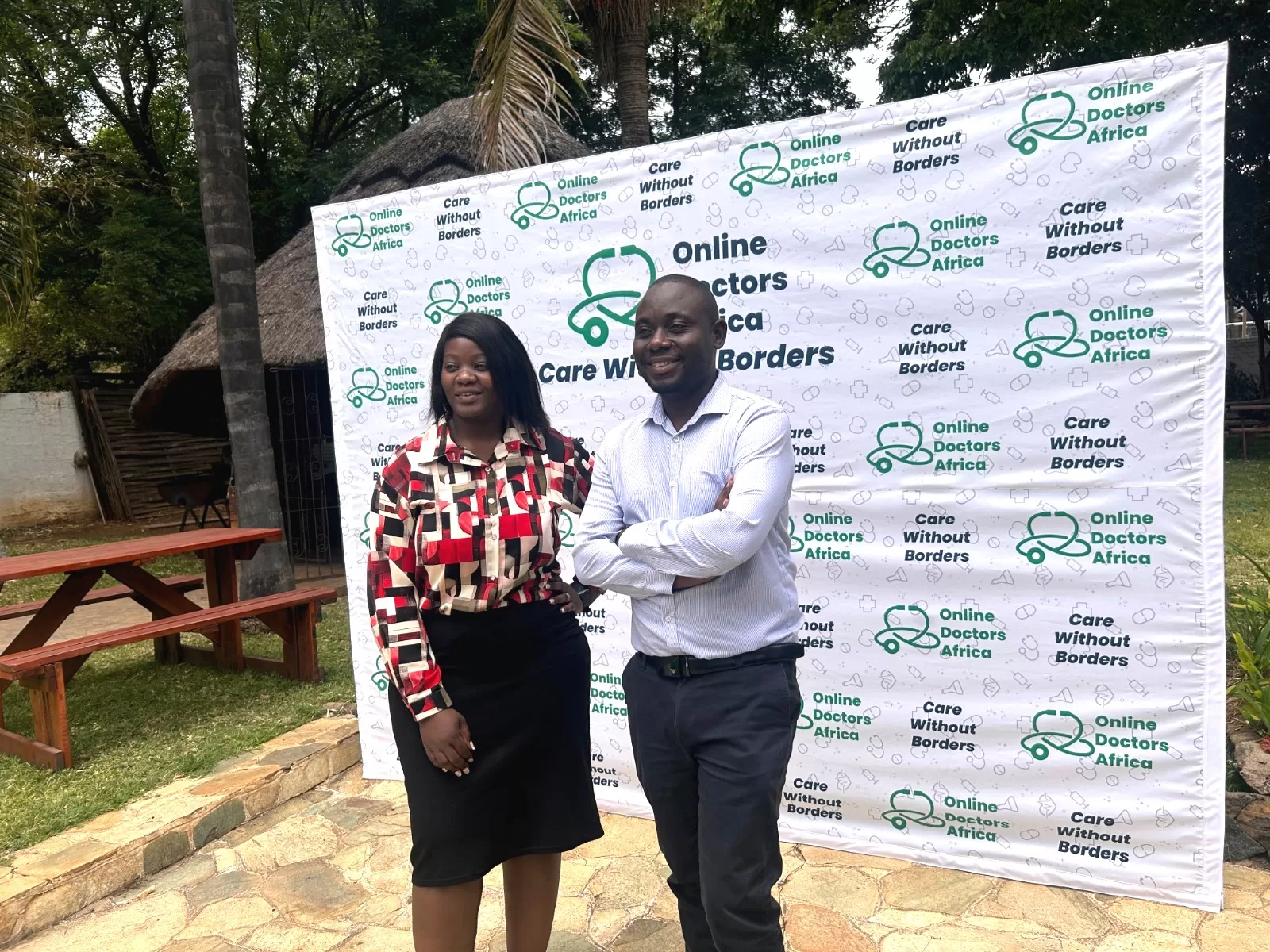
Online Doctors Africa wants to make it easier for Zimbabweans to find medical help and pay for it, even when they don’t have the money right away.
The platform, which launched today, combines telemedicine, emergency response, and a healthcare marketplace into one app and website.
It’s trying to pull together pieces of the health system — doctors, pharmacies, nurse aides, labs, and insurers — into one platform.
A directory and telemedicine
In simple terms, the app is a directory. It includes a directory of emergency services. If you need an ambulance or urgent care, it lists contacts and details of nearby services.
You can also search for a general practitioner (GP), a specialist, or even a nurse aide and get results based on your location. And the platform lets you book appointments directly. Pharmacies are listed too.
Practitioners pay to be listed, and the pitch to them is visibility and growth. For users, it’s convenience and choice.
Once you’ve picked a service, you can choose to book a physical visit. or even talk to the doctor via video, audio, or chat.
Payments go through Paynow, meaning you can use EcoCash, Innbucks, Zimswitch, Visa or Mastercard etc.
If you have medical aid, you can use that because the platform is integrated with Health 263. Also, you can use the credit facility to settle any shortfalls. More on that in the next section.
Healthcare on credit
The part that caught my eye is the credit facility.
For those formally employed, the system integrates with employers. Your employer acts as a sort of guarantor, and you can access medical services worth up to 10% of your salary. You get treated now, and the deduction happens when you get paid.
Those in the informal sector don’t get left out, but the approach is different. You form a group that collectively backs each other. If one member disappears before repaying, the rest are on the hook. It’s the same logic behind informal savings groups, just applied to healthcare.
It’s a clever idea. Many people delay getting care because they simply can’t pay up front. A credit line, if managed well, could make a real difference.
But it also comes with risk, both financial and operational, and it will be interesting to see how Online Doctors Africa manages defaults.
AI
They say the platform uses AI-driven analytics to support practitioners, for example, helping them work faster or manage information. But they stressed that AI won’t be acting as a doctor. It’s an assistant, not a replacement.
What’s next
At launch, the app isn’t zero-rated, which could limit adoption given data costs in Zimbabwe. But the team said they’re working on that.
What they can’t work on is making sure people have smartphones to access the app. So, users have to sort that out for themselves.
They’re also targeting insurers and employers, pitching the platform as a way to “enhance value and manage risk” while making healthcare more accessible.
The big picture
Telemedicine in Zimbabwe has mostly been a niche thing, a few clinics experimenting with online consultations here and there. What Online Doctors Africa is attempting is basically a super-app: a one-stop digital health marketplace that connects patients, providers, and insurers.
If it works as advertised, it could make healthcare a little more reachable, especially with the credit feature. But as always with such platforms, the hard part isn’t building the tech (which is hard) — it’s getting practitioners and users to sign up.
The app is no use to practitioners if users don’t sign up, and users will only care if there are doctors on there. So, who signs up first to get the ball rolling? That’s what Online Doctors Africa will have to figure out.
We shall see when the app becomes available to download in about a couple weeks’ time. We did see live demos though.